
Inside 10050 Cielo Drive: History and What Remains

Inside 10050 Cielo Drive is a journey into one of the most discussed homes in American history. Located in the secluded hills of Los Angeles, this once-beautiful residence became internationally known after the tragic murders of actress Sharon Tate and four other people in August 1969. Before that night, the property was a peaceful Hollywood retreat with rustic interiors, spacious grounds, and impressive canyon views.
Over the decades, photographs, documentaries, books, and crime reports have kept public interest alive. However, many people searching for the original house are unaware that it was demolished in 1994.
Understanding the property’s history requires separating authentic photographs, established court findings, and architectural records from speculation and modern recreations.
Quick Answer: 10050 Cielo Drive was a farmhouse-style home in Benedict Canyon, Los Angeles, where Sharon Tate and four others were murdered by followers of Charles Manson on August 9, 1969. The original residence featured rustic living spaces, a swimming pool, and a guesthouse. It was demolished in 1994 and replaced by a much larger mansion with the address 10066 Cielo Drive. pcad.lib.washington.edu+2
Inside 10050 Cielo Drive: The Original House and Layout
The original house at 10050 Cielo Drive was built in 1941. Located in the Benedict Canyon neighborhood north of Beverly Hills, it offered the privacy and natural surroundings that attracted people working in Hollywood.
Unlike the enormous modern mansions associated with celebrity neighborhoods today, this property resembled a traditional country farmhouse.
Its architecture incorporated wooden shingles, stone surfaces, large windows, and a welcoming entrance. Mature trees and landscaped gardens helped create a secluded atmosphere.
The home stood above the surrounding canyon, offering views of the hills while remaining relatively hidden from nearby roads.
According to architectural research published by the University of Washington’s Pacific Coast Architecture Database, the original building was a one-story residence constructed in 1941. It was later demolished in 1994. pcad.lib.washington.edu
What Did the Living Room Inside 10050 Cielo Drive Look Like?
The living room was one of the home’s defining spaces.
Architectural descriptions and historical photographs indicate that the property featured exposed wooden ceiling beams, stone fireplaces, wood-paneled surfaces, and large windows.
These details reflected the rustic design popular in Southern California country-style residences during the mid-20th century.
House Beautiful described the original home as approximately 3,200 square feet, with features including a living room hayloft and exposed rafters. This is a published historical description rather than a newly verified architectural measurement. Sharon Tate’s House
The living room became especially significant during the investigation because Sharon Tate and Jay Sebring were discovered there.
However, it is important to distinguish photographs of the room before August 1969 from images taken during the police investigation.
The furnishings and arrangements visible in crime-scene photographs do not necessarily represent how the room normally appeared in everyday life.
Bedrooms, Guesthouse, and Outdoor Areas
The main residence included bedrooms and shared living spaces arranged within its farmhouse-style structure.
Historical descriptions also identify several important outdoor features, including a swimming pool, landscaped lawns, a separate garage, and a guesthouse.
The guesthouse was particularly important because it accommodated individuals independently of the main residence.
During the August 1969 murders, William Garretson was staying in the guesthouse. Steven Parent, one of the victims, had visited Garretson before encountering the attackers while leaving the property.
The property’s long driveway and gated entrance contributed to its privacy. These same features later became important when investigators reconstructed the movements of people entering and leaving the grounds.
Although the original house is often attributed to architect Robert Byrd, the Pacific Coast Architecture Database notes that this attribution has not been conclusively established. Its exact architectural authorship should therefore not be treated as certain.

Who Lived at 10050 Cielo Drive Before the Murders?
The history of 10050 Cielo Drive began decades before the tragedy that made its address famous.
French actress Michèle Morgan acquired the residence in 1941. Contemporary newspaper reporting described the home as an early American farmhouse-style property.
During subsequent years, the house was associated with several entertainment figures, including Cary Grant, Dyan Cannon, and Henry Fonda.
These earlier connections explain why the residence became an attractive rental property within Hollywood circles.
Terry Melcher and Candice Bergen
During the 1960s, record producer Terry Melcher and actress Candice Bergen lived at the property.
Melcher worked in the music industry and became acquainted with Charles Manson, who wanted to establish a recording career.
Their professional relationship did not develop into the music opportunity Manson hoped for.
The house’s association with Melcher eventually became an important element in discussions about why the location was targeted.
Some accounts have suggested that Manson intended to frighten or retaliate against Melcher. However, reducing the murders to a simple case of mistaken identity does not fully reflect the evidence presented in court.
By August 1969, Melcher and Bergen had already left the property. Sharon Tate’s House
Sharon Tate and Roman Polanski
In February 1969, actress Sharon Tate and her husband, film director Roman Polanski, began renting the property from its owner, entertainment industry representative Rudolph Altobelli.
Tate was developing her acting career and had appeared in films including Valley of the Dolls and The Fearless Vampire Killers.
The residence provided a private setting away from Hollywood’s busier neighborhoods.
During the summer of 1969, Polanski was working in Europe while Tate remained in Los Angeles.
Her friends Abigail Folger and Wojciech Frykowski were staying at the house. Jay Sebring, a hairstylist and longtime friend of Tate, was also present on the tragic night.
Court records confirm that Tate and Polanski were tenants rather than owners of the property. FindLaw
What Happened Inside 10050 Cielo Drive in August 1969?
The events at 10050 Cielo Drive unfolded during the night of August 8 and the early morning of August 9, 1969.
Charles Manson was the leader of a group commonly known as the Manson Family.
His followers lived under his influence and participated in criminal activities that eventually included multiple murders.
According to the evidence described in the California appellate decision People v. Manson, Manson directed members of his group to travel to the Cielo Drive residence.
Four followers went to the property: Charles “Tex” Watson, Susan Atkins, Patricia Krenwinkel, and Linda Kasabian.
Watson, Atkins, and Krenwinkel participated directly in the killings. Kasabian served as a lookout and subsequently became a major prosecution witness.
Manson himself was not present at the Cielo Drive house during the murders.
The Five Victims
Five people were killed on the property:
- Sharon Tate: A 26-year-old actress who was pregnant at the time.
- Jay Sebring: A prominent Hollywood hairstylist and Tate’s friend.
- Abigail Folger: A coffee-company heiress who was staying at the residence.
- Wojciech Frykowski: A Polish writer and Folger’s partner.
- Steven Parent: An 18-year-old visitor who had been at the guesthouse.
The deaths of Tate and her unborn child made the tragedy especially devastating for her family.
The killings shocked the entertainment industry and generated extensive national news coverage.
What Investigators Found
The crime scene inside 10050 Cielo Drive became central to the subsequent prosecution.
When housekeeper Winifred Chapman arrived on the morning of August 9, she discovered signs of the murders and sought help.
Police responding to the property found five victims in different locations.
Tate and Sebring were discovered in the living room. Folger and Frykowski were found outside on the front lawn, while Parent was found inside his car near the entrance.
These locations were documented in the appellate court’s account of the investigation.
Investigators also examined physical evidence, including fingerprints, weapons-related evidence, and material collected throughout the house and grounds.
The prosecution later used eyewitness testimony, physical findings, and other evidence to establish the defendants’ roles.
The California Court of Appeal documented these findings in its August 13, 1976, decision. FindLaw
Why Was the House Targeted?
The question of motive has generated debate for decades.
Manson’s earlier contact with Terry Melcher contributed to theories connecting the murders to his frustration with the music industry.
At the same time, prosecutors presented evidence of Manson’s extreme beliefs, particularly his obsession with an anticipated racial conflict he called “Helter Skelter.”
The prosecution argued that these beliefs helped explain his direction of the killings.
The court record supports the conclusion that Manson exercised considerable control over his followers and directed the criminal operation.
However, individual psychological motives are more difficult to establish with complete certainty than the events documented through testimony and physical evidence.
The following night, Manson Family members also murdered Leno and Rosemary LaBianca at their Los Feliz home.
The two incidents became collectively known as the Tate-LaBianca murders. FindLaw
What Do the 10050 Cielo Drive Crime Scene Photos Reveal?
Searches for the crime scene inside 10050 Cielo Drive often lead to historical photographs showing the house’s exterior, entrance, living room, and surrounding grounds.
Many photographs were taken during the initial police investigation. Others were captured by journalists who documented the property afterward.
These images can provide valuable historical information, but they require careful interpretation.
Understanding the Historical Evidence
Photographs can confirm physical characteristics such as building materials, room arrangements, furniture placement, and the appearance of the grounds at a particular time.
They may also help researchers understand how the main residence related to its driveway, pool, and guesthouse.
However, photographs cannot independently establish every event that occurred during the murders.
A room photographed after police entered the property may have changed since the crime occurred. Investigators, emergency personnel, and other authorized individuals could have entered or moved through the scene.
Similarly, an image circulating online without a reliable date or source may have been incorrectly identified.
The original police investigation documented the property through photographs, evidence records, and diagrams covering the main house, guesthouse, and entrance areas. CharlesManson.com
Comparing the Different Types of Images
| Image or record type | What it can establish | Important limitation |
|---|---|---|
| Original exterior photographs | Historical architecture and landscaping | May not show the complete property |
| Period interior photographs | Furniture, room design, and architectural features | The date and room identification require verification |
| Police crime-scene photographs | Evidence locations during the investigation | Cannot establish the complete sequence of events alone |
| Architectural diagrams | General layout of rooms and buildings | May not reflect every furnishing or later alteration |
| Modern property photographs | The appearance of the replacement mansion | Do not show the original 1969 house |
A particularly important distinction concerns photographs labeled “Sharon inside 10050 Cielo Drive.”
An image showing Tate at home before the murders is different from a photograph documenting the crime scene.
These categories should not be combined or presented interchangeably.
For readers who want reliable historical information, original captions, archive dates, and official records are more useful than sensational image descriptions.
Inside 10050 Cielo Drive Today: What Remains?
One of the most common misunderstandings about the property is that the original house still exists.
It does not.
After the 1969 murders, the residence remained standing for more than two decades and continued to have different occupants.
During the early 1990s, musician Trent Reznor rented the property and used it while working on Nine Inch Nails recordings, including The Downward Spiral.
In an October 1994 interview with the Los Angeles Times, Reznor discussed the home’s isolation and its role in his creative work.
The building was demolished in 1994, shortly after this period of occupancy. Los Angeles Times+1
Why Was the Original House Demolished?
Real estate investor Alvin Weintraub had the original residence demolished and redeveloped the site.
The property was subsequently given the address 10066 Cielo Drive, separating the new house’s identity from the notorious historical address.
A larger residence, designed by architect Richard Landry, was completed in 1996.
This replacement property had a dramatically different architectural style and scale.
The 2026 real estate listing for 10066 Cielo Drive describes an approximately 21,000-square-foot mansion with nine bedrooms, extensive entertainment facilities, and landscaped grounds.
These are specifications reported in the property’s marketing materials, not independently measured figures. Los Angeles Times+1
The original living room, bedrooms, and other interior spaces from 1969 therefore cannot be visited or photographed today.
Any modern photographs showing the inside of 10066 Cielo Drive depict the replacement building, not the home occupied by Sharon Tate.
The site is private residential property, not a public historical museum or an authorized crime-scene tour.
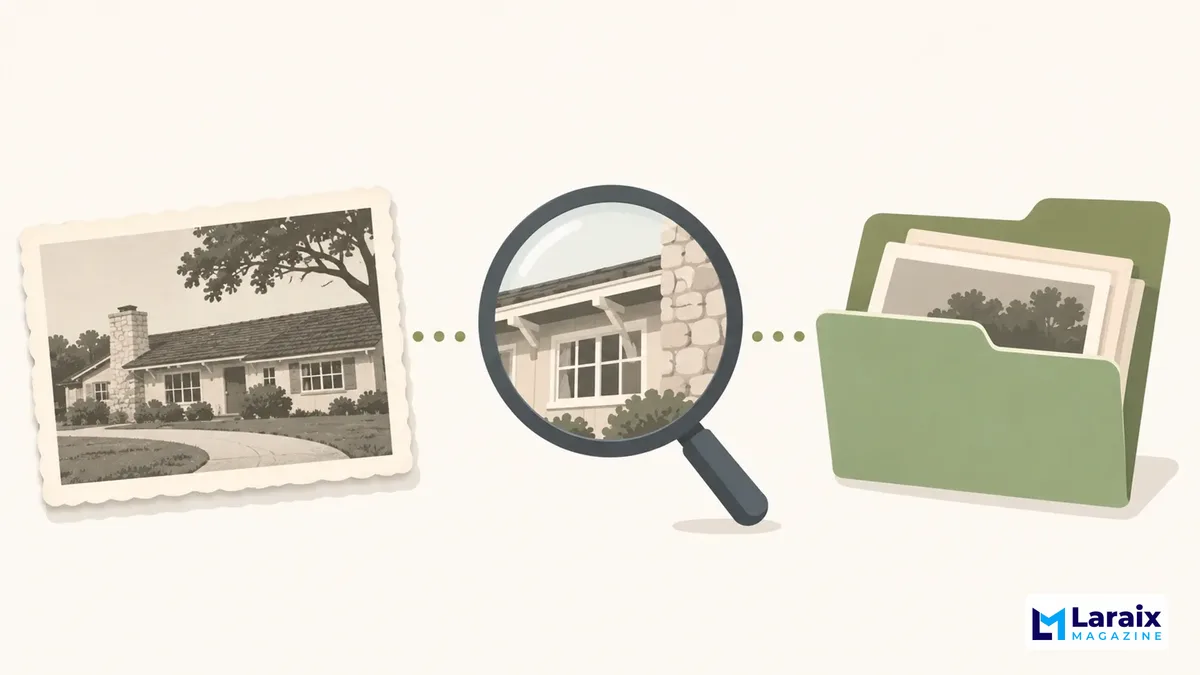
How to Find Authentic Historical Photographs
Readers researching the original property can follow a simple process to avoid misleading images.
Identify the photograph’s source. Look for established news archives, documented police photographs, reputable historical collections, or recognizable archival agencies.
Check the date. Determine whether the photograph was taken before August 1969, during the investigation, or in the decades before demolition.
Compare architectural features. Look for the farmhouse-style exterior, exposed ceiling beams, stonework, and other features associated with the original residence.
Verify the description. Compare the image’s caption with established historical reporting and the documented layout of the property. A caption on a social media post is not sufficient proof.
Separate the original building from the replacement. Remember that photos of the mansion constructed in 1996 cannot show the interior of the original house.
The Los Angeles Times historical archive and Wikimedia Commons’ documented photograph collections provide useful starting points, although individual image provenance and rights should still be checked.
This approach helps readers understand the actual property’s history without relying on fictional recreations or misleadingly labeled material.
Frequently Asked Questions
1. Does the original 10050 Cielo Drive house still exist?
No. The original farmhouse-style residence was demolished in 1994. A substantially larger mansion was completed on the site in 1996, and the address was changed to 10066 Cielo Drive.
2. What did the living room inside 10050 Cielo Drive look like?
Historical descriptions indicate that the living room featured rustic design elements, including exposed wooden beams, stone fireplace details, and traditional furnishings. Period photographs provide a more reliable impression of its appearance than modern reconstructions.
3. Did Sharon Tate own 10050 Cielo Drive?
No. Sharon Tate and Roman Polanski rented the residence from Rudolph Altobelli beginning in February 1969. The property had previously been occupied by several people connected to the entertainment industry.
4. Were all five murder victims found inside the house?
No. Sharon Tate and Jay Sebring were discovered in the living room. Abigail Folger and Wojciech Frykowski were found on the front lawn, while Steven Parent was found in his car near the entrance to the property.
5. Was Charles Manson physically present during the Cielo Drive murders?
No. Charles Manson directed members of his group to the property but did not personally participate at the house that night. His followers carried out the killings, and he was subsequently convicted for his role in the criminal conspiracy and murders.
6. What is located at 10050 Cielo Drive today?
The original address is no longer used for the historic residence. The site is now associated with 10066 Cielo Drive, where a large privately owned mansion stands. It is not an operating museum, and the original rooms no longer exist.
7. Are photographs labeled “inside 10050 Cielo Drive” always authentic?
No. Some are genuine archival photographs, while others may depict the replacement mansion, movie sets, or inaccurately labeled interiors. Authenticity should be checked through source credits, dates, architectural details, and supporting historical documentation.
Conclusion
Inside 10050 Cielo Drive, the story extends beyond one of America’s most notorious murder cases. The original home was once a secluded Hollywood residence with distinctive farmhouse architecture, warm living spaces, and landscaped grounds. Its association with Sharon Tate and the tragic events of August 1969 transformed its place in American history.
Although the building was demolished in 1994, court records, historical reporting, architectural documentation, and authenticated photographs preserve important details about the property.
Anyone researching Inside 10050 Cielo Drive today should begin with the 1976 California appellate court decision and established photographic archives. Comparing those records with reliable architectural research offers a more accurate understanding of the home and its history while keeping the victims, rather than sensational speculation, at the center of the story.