
Business Guide Disbusinessfied: A Practical Guide
Starting a business can feel overwhelming when every decision involves unfamiliar terminology, financial risks, and competing advice. The business guide disbusinessfied approach offers a simpler way to think about entrepreneurship: focus on customer needs, make informed decisions, control expenses, and build sustainable business systems. Whether you want to launch a local service company, open an online store, or improve an existing operation, understanding the fundamentals can help you avoid expensive mistakes.
However, business success requires more than following motivational advice or copying another entrepreneur’s strategy. You need a realistic business model, evidence of customer demand, clear financial records, and a plan that fits your resources. This guide explains how to bring those elements together, with practical steps and reliable resources for entrepreneurs in the United States.
Quick Answer: Business guide disbusinessfied refers to online guidance emphasizing simpler, more practical business planning and management. It is not a recognized official business framework. Entrepreneurs can apply its general principles by researching customers, testing business ideas, estimating startup costs, meeting legal requirements, creating marketing systems, and measuring results before expanding.
What Is Business Guide Disbusinessfied?
Business guide disbusinessfied is a phrase associated with online articles about entrepreneurship, business improvement, and simplifying traditional management practices. Websites using the Disbusinessfied name publish guidance covering business planning, financial decisions, customer relationships, and sustainable growth.
The term does not have a universally accepted professional or academic definition. Different websites interpret it differently. For example, Disbusinessfied.com discusses diversification and developing additional business opportunities, while Disbusinessfied.co.uk emphasizes business planning, operational efficiency, and customer management. These are editorial approaches rather than an established standardized methodology. %sitename%+2
For practical purposes, the concept can be understood as reducing unnecessary complexity while retaining the planning, financial discipline, and compliance that businesses actually need.
Principles Behind a Simpler Business Strategy
A useful business strategy begins with identifying problems customers are willing to pay to solve. Rather than investing heavily in an untested idea, entrepreneurs can gather evidence through customer interviews, competitor research, and small experiments.
Financial discipline is equally important. Understanding your costs, prices, margins, and available cash makes decisions more reliable. Customer relationships also matter because effective communication, dependable service, and consistent delivery support repeat purchases and referrals.
Finally, simplification should improve decision-making, not eliminate essential work. Accounting, insurance, contracts, licenses, and regulatory responsibilities may be necessary even when a business has a very simple operating model.

What You Need Before Starting a Business
Before following any starting a business guide, assess your idea, resources, market, and obligations. Good preparation reduces uncertainty and gives you a clearer picture of what launching will involve.
A Clear Business Idea and Target Market
Begin by explaining what your business offers and who will purchase it. A specific customer problem is usually more useful than a broad ambition to become an entrepreneur.
For example, instead of planning a general cleaning business, you might focus initially on recurring residential cleaning for working households in a defined service area. This gives you a clearer audience, service package, and starting point for marketing.
Research competitors, compare their offerings, and speak with potential customers. Ask about their current experiences, frustrations, and purchasing priorities. Positive feedback is useful, but actual purchases or paid commitments provide stronger evidence of demand.
The U.S. Small Business Administration recommends market research and competitive analysis as foundational activities when planning a business. U.S. Small Business Administration+1
A Realistic Startup Budget
Every business has different financial requirements. A home-based consulting service may need limited equipment, while a restaurant, retail operation, or medical practice can require substantial investment.
Consider initial expenses such as registration, permits, equipment, inventory, software, insurance, professional services, and marketing. Separate these from recurring expenses such as rent, subscriptions, utilities, payroll, and supplies.
You should also calculate how much personal and business cash you can reasonably commit without assuming immediate profitability.
A simple break-even calculation is useful:
Break-even units = Fixed costs ÷ (Selling price per unit − Variable cost per unit)
For example, suppose a business has hypothetical monthly fixed costs of $1,500. It charges $100 per service and spends $40 in variable costs to deliver each service. It would need 25 sales to cover those fixed and variable operating costs, before accounting for other obligations not included in the example.
The SBA provides additional guidance for estimating startup costs and conducting break-even analysis. Small Business Administration+1
Legal and Administrative Requirements
Business registration, taxes, licensing, and insurance depend on your location, industry, and business structure.
A sole proprietorship may have fewer initial formation requirements, but it generally does not create legal separation between the owner and business. An LLC or corporation can provide different liability and organizational features, although protections are not unlimited.
The IRS explains that businesses may need an Employer Identification Number (EIN) depending on their structure and activities. EINs are available directly from the IRS without a government application fee.
The IRS starting a business checklist is a useful reference, but state and local requirements must also be checked. Internal Revenue Service+1
Business Guide Disbusinessfied: Step-by-Step Instructions
The following process combines established small business practices with the idea of simplifying unnecessary decisions. It is suitable for many service-based and online businesses, although regulated industries may require additional steps.
Step 1: Identify a Specific Customer Problem
Write down the problem your business intends to solve. Describe your ideal customer, the solution you will provide, and why someone would choose it over an existing alternative.
Avoid starting with a long product list. One well-defined offering is easier to evaluate, price, and improve.
Step 2: Research Your Market
Study businesses serving similar customers. Review their pricing structures, service descriptions, customer feedback, and positioning.
Talk with prospective buyers rather than relying exclusively on online statistics or assumptions. Try to understand how customers currently solve the problem and what would motivate them to change providers.
Look for evidence of unmet needs without assuming that every complaint represents a profitable opportunity.
Step 3: Test Your Offer Before Investing Heavily
Create a limited version of your product or service. This could be a small paid pilot, a sample package, or an initial service offered to a manageable group of customers.
Track inquiries, actual purchases, delivery costs, and feedback.
Set a clear test budget and decide in advance what would justify further investment. A pilot should help you learn whether customers value the offering, not merely whether they like the idea.
Step 4: Create a One-Page Business Plan
Your initial plan should explain the business without unnecessary complexity.
Include your target customers, main offering, competitive advantage, pricing, expected costs, marketing channels, and short-term objectives.
A one-page plan can be appropriate for an early experiment. More detailed financial forecasts and documentation may be necessary when applying for financing, attracting investors, or entering regulated industries.
Step 5: Complete Required Business Setup
Choose a suitable legal structure and business name, verify registration requirements, and obtain necessary licenses or permits before conducting activities that require them.
Open an appropriate business bank account and establish a bookkeeping system. Keep business and personal transactions separate wherever possible.
The SBA’s business launch resources cover business structures, registration, licenses, banking, and insurance. Requirements depend on location and activity. Small Business Administration
Step 6: Build a Simple Online Presence
Create a professional website or landing page that clearly explains your services, pricing where appropriate, contact information, and how customers can purchase or request a quote.
For eligible businesses that interact with customers in person, a free Google Business Profile can help maintain information on Google Search and Maps. Google’s eligibility requirements still apply, so an entirely online business may not qualify.
Google confirms that creating and managing a Business Profile is free. Google Ads
Step 7: Choose One Primary Marketing Channel
Focus first on the channel most likely to reach your customers.
A local service business may prioritize local search and referrals. An online educational service might begin with useful articles and email communications. A product business could test a marketplace or its own storefront.
Avoid spreading a small marketing budget across multiple unproven channels. Measure leads, conversion rates, customer acquisition costs, and sales before expanding.
Step 8: Monitor Results and Improve
Track revenue, operating expenses, gross margins, available cash, and customer feedback.
Review whether customers are purchasing repeatedly, whether your pricing covers costs, and which activities generate measurable results.
Adjust one major element at a time when practical. This makes it easier to understand whether a change in pricing, advertising, or service delivery actually improved performance.
Choosing the Right Business Model and Marketing Tools
No single business model works for every entrepreneur. Your choice should reflect your experience, available capital, desired flexibility, and customer expectations.
The following comparison provides general planning considerations rather than guaranteed performance outcomes.
| Business model | Advantages | Challenges | Potential fit |
|---|---|---|---|
| Local service business | Can start with a narrow service area; direct customer contact | Scheduling, travel, staffing, and local competition | Cleaning, repair, consulting |
| Online store | Can reach customers beyond one location | Inventory, fulfillment, returns, customer acquisition | Physical product sellers |
| Freelance or consulting | Relatively flexible setup; may need limited initial equipment | Income depends on client demand and capacity | Skilled professionals |
| Digital products | No physical shipping; products can be delivered repeatedly | Product development, support, and audience building | Educators and creators |
| Subscription services | Potential for more predictable recurring revenue | Retention, consistent delivery, cancellation management | Maintenance and ongoing services |
Local Search, Email Marketing, and E-Commerce
Entrepreneurs searching for a google my business guide should recognize that the current product name is Google Business Profile. Eligible businesses can use it to manage their listings, provide accurate hours, publish business information, and respond to customer reviews.
A small business guide to email marketing should emphasize useful communication and legal compliance. The Federal Trade Commission explains that commercial email generally requires truthful sender information, accurate subject lines, an appropriate postal address, and a functioning opt-out method. Businesses must honor opt-out requests within 10 business days. Federal Trade Commission
For businesses selling physical products, an Amazon business guide may help explain marketplace-specific topics such as seller fees, fulfillment, product listings, and account requirements. However, marketplace selling is only one option, and fees or policies should be verified directly before launch.
Specialized industries require more focused planning. For example, a medspa business guide for nurse practitioners must consider state-specific professional scope-of-practice rules, supervision or collaboration requirements where applicable, and medical facility regulations. General entrepreneurship advice cannot replace qualified legal and clinical guidance.
The goal is to select tools that support a clear customer need rather than adopting technology simply because competitors use it.
Common Business Mistakes and How to Fix Them
Even a strong business idea can struggle when important operational decisions are overlooked.
Mistake 1: Launching Without Customer Validation
Entrepreneurs sometimes invest in inventory, branding, or expensive websites before confirming that customers want the product.
Fix: Test a limited offer, collect meaningful feedback, and look for evidence of purchasing behavior before committing substantial resources.
Mistake 2: Confusing Revenue With Profit
High sales do not necessarily mean a healthy business. Delivery expenses, payment processing, advertising, taxes, and operating costs can consume significant portions of revenue.
Fix: Maintain accurate bookkeeping and calculate your margins. Review cash flow separately from profitability because sales recorded today may not translate into immediately available cash.
The SBA recommends consistent financial records and understanding business finances as part of effective management. Small Business Administration
Mistake 3: Spending Too Much on Marketing Too Early
Paid advertising can consume startup funds without producing profitable customers, especially when messaging or targeting is weak.
Fix: Start with controlled tests and compare actual customer acquisition costs against the contribution each customer provides. Avoid assuming that impressions, clicks, or social media followers equal sales.
Mistake 4: Making Unsupported Advertising Claims
Promising guaranteed results, exaggerating product benefits, or publishing misleading testimonials can damage trust and create legal problems.
Fix: Use accurate, verifiable claims and provide clear explanations of limitations. The FTC states that advertising must be truthful, non-deceptive, and supported by appropriate evidence. Federal Trade Commission
Mistake 5: Trying to Expand Too Quickly
Adding services, locations, or employees before existing operations are stable can increase costs and management complexity.
Fix: Establish consistent delivery processes and reliable financial reporting first. Expand when demand, capacity, and available funding support the decision.
Diversification may eventually help reduce dependence on a single product or customer group, but additional revenue streams also introduce costs and operational responsibilities.
Mistake 6: Following Unverified Business Advice
Online articles sometimes contain unsupported statistics, exaggerated earnings examples, or stories presented without independently checkable evidence.
Fix: Cross-check financial and regulatory information against primary sources such as the SBA, IRS, FTC, and relevant state agencies. Treat unverified success stories as anecdotes, not reliable forecasts.
Next Steps: Build a Practical 30-Day Action Plan
After completing the basic setup, turn your research into measurable activities. The following schedule is an illustrative planning framework, not a guarantee that every business can launch within 30 days.
Week 1: Research and Define
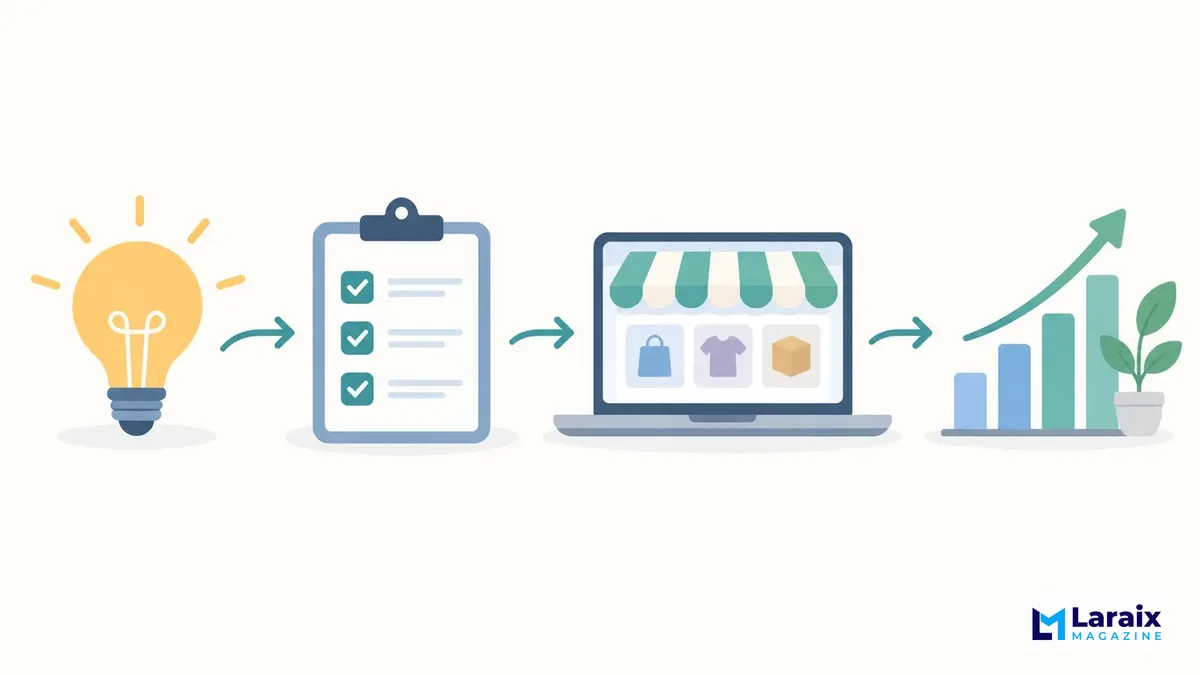
Identify one customer group and one clear offering. Review competitors, talk with prospective buyers, and document the problem your business will solve.
Finish the week with a short statement describing your target audience, proposed solution, and the evidence supporting demand.
Week 2: Calculate and Prepare
Create an initial budget and estimate your startup costs, recurring expenses, and expected contribution per sale.
Research your legal requirements and prepare a basic business plan. Complete any registrations or permissions needed at this stage, recognizing that approvals may take longer than the example schedule.
Week 3: Test and Promote
When legally permitted, run a limited offer or pilot. Set up a clear way for potential customers to contact you or make purchases.
Choose one primary marketing channel and measure inquiries, sales, customer objections, and fulfillment costs.
Week 4: Review and Decide
Compare your initial assumptions with actual results. Identify which activities attracted customers and which consumed time or money without clear benefits.
Decide whether to improve the offer, adjust pricing, run another test, or expand cautiously. If demand remains uncertain, gather more evidence before increasing your investment.
For additional support, the SBA’s local assistance network connects entrepreneurs with Small Business Development Centers, SCORE mentors, and other resources offering free or low-cost assistance. Small Business Administration
Frequently Asked Questions
1. What does business guide disbusinessfied mean?
It is a search phrase associated with online business guidance emphasizing practical planning, financial awareness, customer relationships, and simpler operations. It is not an officially standardized business methodology, and different websites use the term in different ways.
2. Is Disbusinessfied suitable for small business beginners?
Its general principles can be useful for beginners because they focus on understanding customers, controlling costs, and improving decisions. However, entrepreneurs should supplement general advice with authoritative tax, legal, and industry-specific resources.
3. How much money do I need to start a small business?
Startup costs vary considerably by business type, location, equipment needs, and regulatory requirements. A freelance service may need relatively little initial investment, while a physical storefront or specialized facility may require substantial capital. Prepare a budget based on actual quotes and expected expenses rather than generic online estimates.
4. Can I start a business without a business degree?
Yes. A business degree is not a universal requirement for entrepreneurship in the United States. However, certain professions and regulated services require specific education, credentials, or licenses. Accounting knowledge, customer research, financial planning, and relevant practical experience can all be valuable.
5. What is the difference between Disbusinessfied and other business guides?
Disbusinessfied-related articles commonly emphasize simplicity, practical execution, and sustainable growth. Other online titles, including business guide dismoneyfied or business guide thestripesbizness, may address overlapping entrepreneurship topics. Their names alone do not establish distinct, independently validated frameworks.
6. What marketing strategy works best for a new small business?
The most appropriate strategy depends on customer behavior, budget, and business model. Local businesses may benefit from referrals and local search, while online businesses may use content, email, or marketplace channels. Begin with one measurable approach and evaluate actual results before expanding.
7. How can I tell whether my business is ready to grow?
Look for repeated customer demand, manageable operating costs, reliable service delivery, sufficient available cash, and evidence that additional sales can be fulfilled profitably. Growth should be based on financial and operational capacity rather than revenue goals alone.
Conclusion
The business guide disbusinessfied concept provides a useful reminder that entrepreneurship does not have to involve unnecessary complexity. Effective business management begins with understanding customers, developing a viable offering, maintaining financial discipline, following legal requirements, and measuring what works.
Its most practical lesson is to make business decisions using evidence rather than assumptions. Simple planning tools, accurate records, and controlled experiments can support better choices without replacing the professional expertise some businesses require.
Start by writing a one-page business plan, estimating your essential costs, and identifying a small group of potential customers. Use their feedback and your financial calculations to determine the next sensible step before committing more resources.